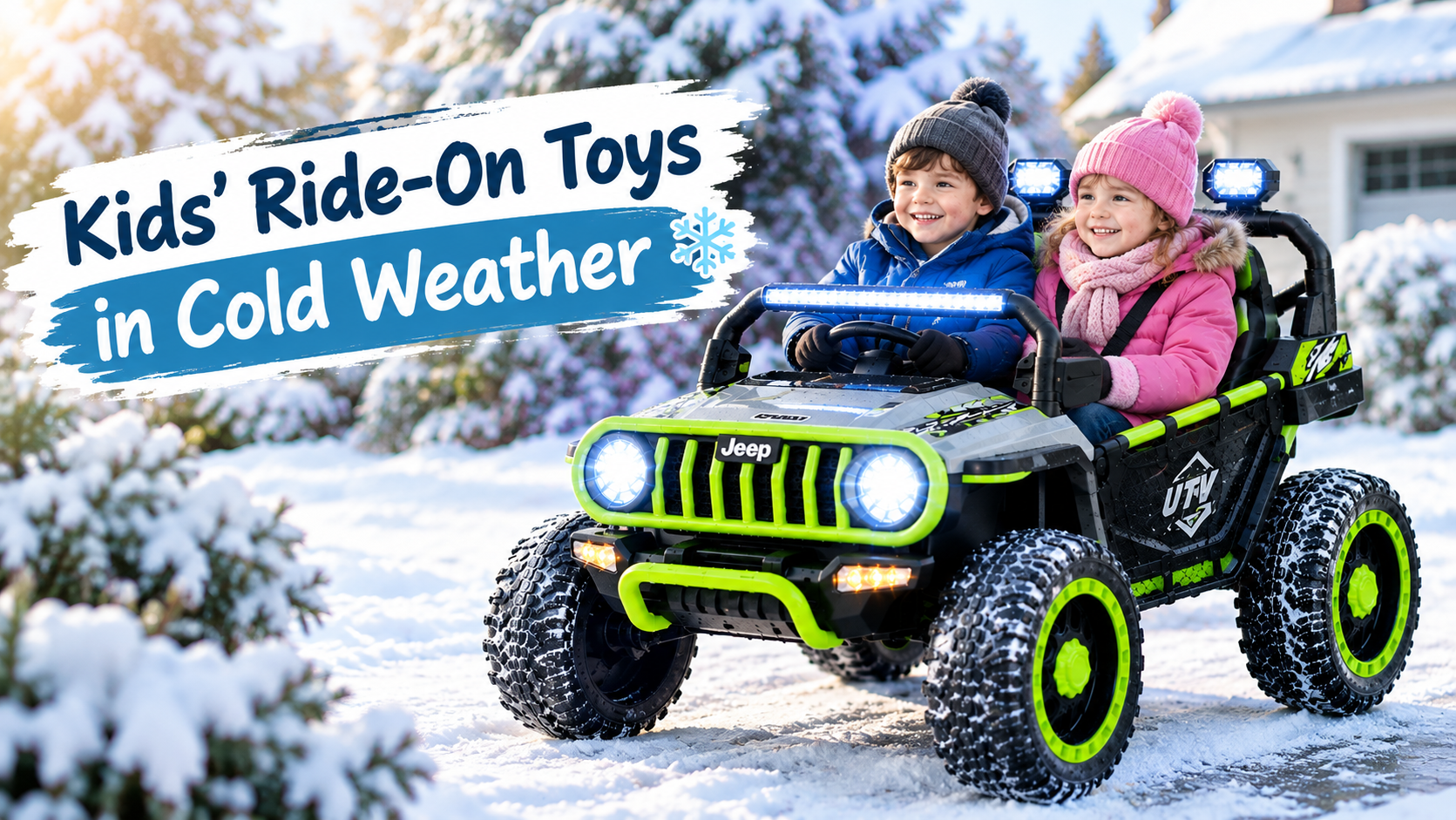
The first crisp weekend of fall brings a familiar question. The ride-on worked all summer, so can it keep going now that mornings are cold? Other families are planning a winter holiday gift and wondering whether it will be usable or just parked in the garage until spring.
Short answer: Often yes, on dry, clear days with a few adjustments. Cold mostly changes three things. The battery delivers less and needs careful charging. Frost, ice, and damp leaves reduce traction. And your child, who sits still while the vehicle moves, can get cold sooner than you expect. When temperatures reach freezing or the ground is icy or snowy, the sensible choice is to ride indoors or wait.
A Quick Cold-Weather Decision Guide
Conditions
Verdict
What to do
Cool, dry day, pavement and grass clear
Go
Normal supervised riding. Expect run time to dip a little.
Frost on grass or pavement, shaded patches, damp leaves
Lean no
Wait for the sun to dry the surface, or choose another day.
At or below freezing, ice, snow, or slush
Stop
Skip outdoor riding and use an indoor option.
Battery sitting in a freezing garage or shed
Stop
Bring the battery inside before charging or riding.
This is a practical rule of thumb, not a manufacturer rating. The Toysporter listings we reviewed don’t publish a cold-weather operating range, so your owner’s manual has the final say. For snow and slush specifically, Toysporter’s guide onwhether kids’ ride-on toys can get wet explains why moisture and electronics don’t mix.
Why Cold Weather Changes How a Ride-On Performs
Batteries Deliver Less When It’s Cold
A battery is a chemical device, and cold slows the chemistry. The same battery that gave a full afternoon in July can give noticeably less on a 40-degree morning. This applies to both sealed lead-acid and lithium-ion packs, though the effect varies by chemistry and by the specific pack. A ride-on that feels sluggish or runs shorter in the cold isn’t necessarily broken. A battery that has sat in a cold garage will usually perform worse than the same battery kept indoors.
Charging Is Where Cold Can Cause Lasting Damage
Riding in the cold mostly means shorter rides. Charging in the cold is where lasting damage can happen. Battery University’s guidance on charging at high and low temperatures says freezing a lead-acid battery can permanently damage it. It also notes that consumer-grade lithium-ion cells generally shouldn’t be charged below 32°F (0°C). A deeply discharged lead-acid battery is also more vulnerable to freezing than a fully charged one.
The practical rule is to bring the battery inside, let it reach room temperature, then charge it in a dry, ventilated, adult-supervised spot as your manual directs. The charge-after-every-ride habit matters even more in cold months, and Toysporter’sbattery care guide walks through charging routines and cold-season storage.
Plastic, Tires, and Traction Behave Differently
Many plastics become less flexible in cold temperatures, so a curb bump that was harmless in summer may be harder on wheels, doors, and hinges. Before cold-day rides, glance over wheels, door latches, and seat mounts for new cracks or looseness.
Traction matters more than temperature alone. Frost can linger in shaded driveway spots long after the sun has warmed the rest. Wet leaves are slick, and a thin glaze of ice can be nearly invisible. A ride-on that grips dry pavement may slide on any of these, and a parent remote can cut power but can’t restore grip.
What Cold Does to Ride Time
Toysporter’s listings describe the following run times under normal conditions:
The 24V 4WD ride-on UTV with a 10Ah battery: up to about 2 hours.
The 24V kids’ ATV with a 10Ah battery: 1–2 hours.
The 24V three-wheel motorcycle: 2–3 hours of continuous riding.
Those are listing figures. Real run time also depends on terrain, rider weight, speed setting, and temperature. One reviewer on the UTV page reported that run time dropped sharply in cold autumn weather. That is a single anecdote, not a test, but it fits what battery chemistry would suggest.
Plan for shorter rides than you’d expect in summer. Start with a full charge, keep the battery warm until ride time, and ride in the warmest part of the day. Don’t promise a full afternoon on a cold day, because a mid-ride fade is less disappointing if the session was framed as short. If you’re comparing battery capacity across models, theRide on UTV collection shows the stated battery size and run time for each listing.
A Simple Cold-Day Riding Routine
Before the Ride
Keep the battery indoors at room temperature until you’re ready to go.
Walk the route for frost, ice, shaded damp patches, and wet leaves.
If your model has a remote, test it. Cold can weaken the batteries in any remote.
Start on the lowest speed setting, since a slick patch is easier to handle at low speed.
During the Ride
Keep sessions short and check in with your child often.
Watch for sluggish acceleration, which signals a tired or cold battery.
Check hands, cheeks, and toes. A child who is steering and sitting still loses warmth faster than one running around.
Stay within reach and sight, as you would on any ride.
After the Ride
Wipe the vehicle dry, since cold surfaces meeting warm indoor air can collect condensation.
Bring the battery inside and let it reach room temperature before plugging in.
Charge after the ride rather than waiting for the battery to run low.
Dressing Kids for a Cold-Weather Ride
Layers and Seat Belt Fit
Several layers of thin, warm clothing usually work better than one puffy coat. On models with a seat belt, such as the 24V UTV, check that the belt still sits snugly across your child’s torso over their winter clothes. If you have to loosen it a lot to fit over a bulky jacket, switch to thinner layers.
Hands, Feet, and Head
Gloves that still grip a steering wheel or handlebar are worth having. Boots should be thin enough for your child to press a foot pedal, which Toysporter’s ride-on train listing describes as its control method. If your child wears a helmet, make sure it still fits snugly over a thin hat or headband. Toysporter’s guide onwhat your child should wear and how to set up a safe riding space covers protective gear in more detail.
Loose Items to Leave Off
Long scarves, dangling drawstrings, and untied laces can catch on moving parts or get in the way. Tuck or remove them before your child climbs on.
Shorter Days, Lower Light, and Supervision
When clocks go back in early November, the after-school ride window gets dark quickly. Ride while it’s still daylight, and keep riding to the yard or driveway, away from traffic. The LED lights on many models make the ride more fun, but treat them as play features rather than a replacement for daylight. Bright or reflective clothing helps adults see your child.
Supervision matters more as conditions get less forgiving. Toysporter’sride-on UTV and off-road Jeep safety guide covers the supervision habits and house rules that apply on cold days too.
When It’s Too Cold: Moving Play Indoors
On freezing or icy days, an indoor session can keep the fun going. Smaller models on smooth, hard floors work best, and speed should stay at the lowest setting. Toysporter’sindoor riding guidecovers which vehicles suit indoor use, how to protect floors, and how to clear the room. If the vehicle has been in a cold garage, let it reach room temperature before riding.
Buying a Ride-On for a Cold-Climate Winter
Delivery Day and Christmas Morning
If a ride-on arrives during freezing weather, don’t leave the box on the porch or in a cold garage. Bring it inside, let the battery reach room temperature, and give it a full first charge before the big reveal. Toysporter’s guide tosurprising your child with a new ride-on toy covers how to keep the moment a surprise while handling charging and setup.
What to Look For
If your winters are long, think about how much of the ride-on’s life will be spent indoors or on short, cold-day outings. Compact models are easier to use inside. Toysporter’sride-on train listings describe use indoors or outdoors and wheels suited to wood floors, though you should confirm details on the specific product page. For ordering ahead of the holidays, thegift timing guide helps you plan around delivery windows.
Frequently Asked Questions
Can kids ride electric ride-on toys in cold weather?
Often yes, on dry, clear days with precautions. Expect shorter run time, avoid frost, ice, and snow, keep the battery indoors until ride time, and dress your child warmly. If the temperature is at or below freezing, or surfaces are slick, ride indoors or wait.
How cold is too cold for a ride-on toy?
There’s no universal number. Freezing (32°F) is a sensible line for outdoor riding and battery charging. Frost, ice, and snow are reasons to stop even above freezing. Check your owner’s manual, since the Toysporter listings reviewed here don’t state an operating temperature range.
Does cold weather drain ride-on batteries faster?
Cold reduces how much energy a battery delivers, so rides are often shorter even though the battery isn’t “draining” in the usual sense. Starting with a full charge and keeping the battery warm until ride time helps.
Can I charge a ride-on battery in a cold garage?
It’s best not to. Freezing can permanently damage lead-acid batteries, and consumer lithium-ion cells generally shouldn’t be charged below 32°F. Bring the battery inside, let it reach room temperature, and charge it as your manual directs.
Can ride-on toys go on frost, wet leaves, or snow?
Frost and wet leaves reduce traction, so wait for the surface to dry. Snow and slush are outside what these vehicles are built for, so skip them and use an indoor option.
How should I dress my child for a cold-weather ride?
Use thin, warm layers rather than one bulky coat, and check that any seat belt still fits snugly. Choose gloves that grip and boots thin enough to work pedals. Leave off long scarves and dangling drawstrings.
Is it okay to leave a ride-on toy outside in winter?
Indoor storage is the better choice, since cold, frost, and moisture are all hard on batteries and electronics. If the vehicle must stay in an unheated space, bring the battery inside.
Conclusion
Cold weather doesn’t have to end ride-on season, but it changes the rules. Dry, clear days with short sessions, a warm battery, warm kids, and daylight are usually fine. Frost, ice, snow, and freezing temperatures are reasons to switch to indoor play or wait. Treat charging as the step that matters most, and keep the battery indoors. If you’re deciding what to buy for a cold-weather holiday, browseToysporter’s full range of electric ride-on vehicles to compare sizes, batteries, and features.