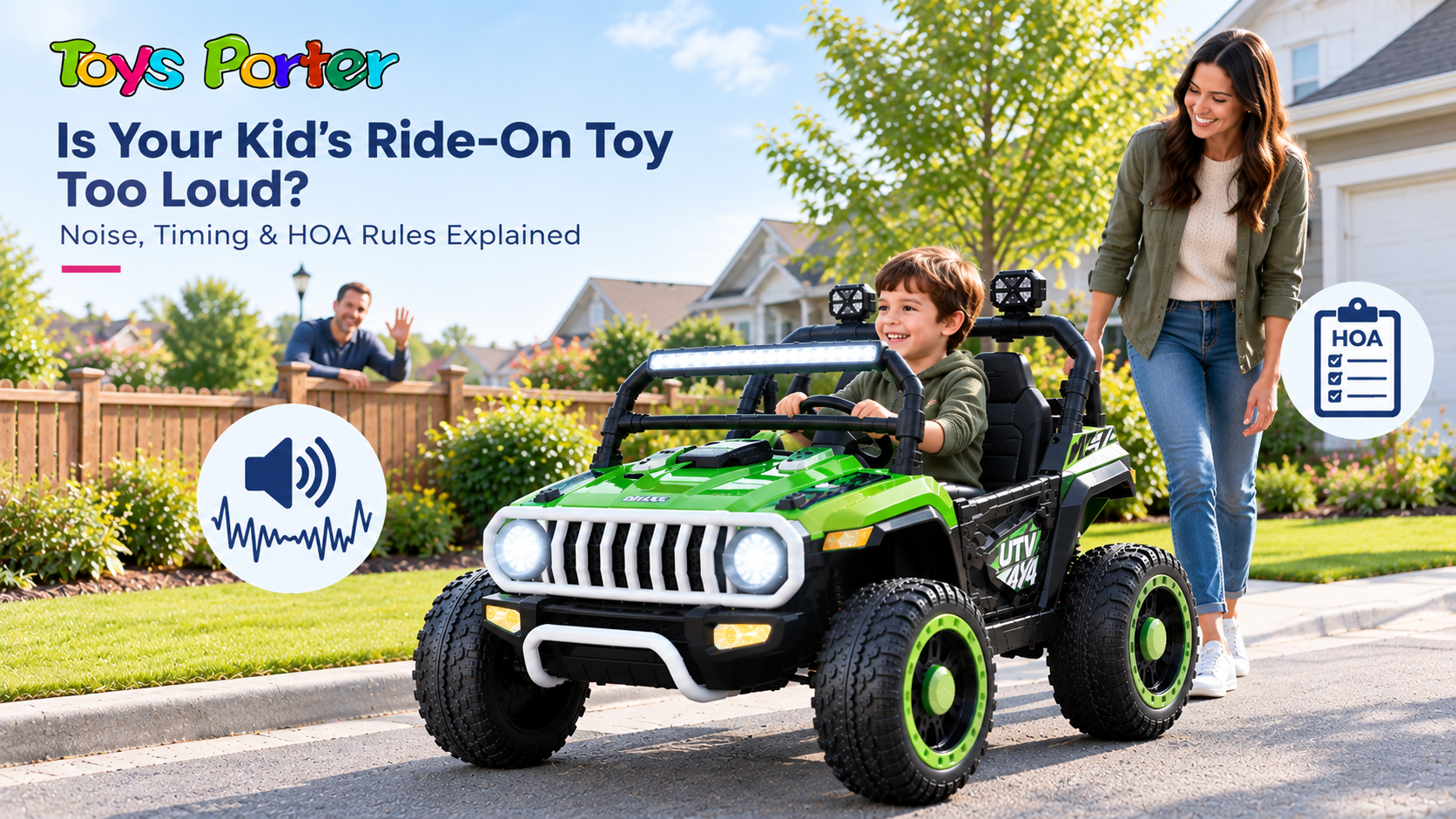
A ride-on toy that seemed perfectly reasonable in a big backyard can suddenly feel like a much bigger deal in a townhome community, a tight suburban cul-de-sac, or anywhere with shared outdoor space and close-set neighbors. Before the excitement of a new motorized vehicle runs into an unexpected conversation with a neighbor or a surprise HOA notice, it’s worth understanding what actually makes these toys noisy, how that compares to everyday household noise, and what rules might already apply to where you live.
Quick answer: Electric ride-on toys are generally much quieter than gas-powered alternatives, since they run on battery-powered motors rather than combustion engines. Most of the noise that does come from them is a combination of motor whine, tire contact with pavement or gravel, and any built-in sound features like horns, engine sound effects, or Bluetooth speakers. Whether that noise becomes a problem usually comes down less to the toy itself and more to timing, location, and whatever noise or vehicle-use rules your specific community has in place – which are worth checking before assuming either way.
What Actually Makes a Ride-On Toy Noisy
Not all the sound coming from a ride-on toy comes from the same place, and understanding the difference helps you figure out where you actually have some control.
The Motor and Drivetrain
The core motor noise on a battery-powered ride-on toy is generally a low hum or whine, not anything close to the rumble of a gas engine. This is one of the clearest advantages electric ride-on toys have over older gas-powered mini bikes or go-karts, which relied on small combustion engines that were considerably louder by design.
The Tires and Riding Surface
Tire material and the surface being ridden on play a bigger role in perceived noise than most parents expect. Toysporter’s own holiday buying guide points out that rubber or EVA foam tires tend to produce a noticeably quieter ride than hard plastic wheels, particularly on pavement, where hard wheels can create a persistent rattling or buzzing sound that carries further than the motor itself.
Built-In Sound Features
Many ride-on vehicles include intentional sound features – a working horn, simulated engine start-up sounds, or a Bluetooth speaker for music, which shows up as a feature on several of Toysporter’s UTV models. These are designed to add to the play experience, but they’re also the most controllable source of noise, since volume levels and whether they’re used at all are entirely up to the rider (or the parent supervising).
How Loud Is “Too Loud” for a Neighborhood
There’s no single number that defines “too loud” for every situation, since it depends heavily on your specific surroundings – how close homes are together, whether windows are typically open, and what time of day riding happens. What’s more useful than chasing an exact decibel figure is understanding the general comparison: electric ride-on toys sit well below gas-powered lawn equipment and small engines in overall loudness, but they’re still a motorized sound source moving through a space that’s otherwise relatively quiet, which is part of why they can stand out even at a modest volume – especially early in the morning or later in the evening when ambient neighborhood noise is naturally lower.
Understanding HOA and Neighborhood Rules
This is the piece that catches a lot of parents off guard, because the relevant rules often aren’t about noise directly – they’re about vehicles.
Common Types of Restrictions
Homeowners associations and some multi-family communities sometimes include language that touches on ride-on toys, even if it wasn’t written with them specifically in mind. Common categories worth being aware of include:
Quiet hours that restrict outdoor activity, including play, during set early-morning or evening windows
Restrictions on motorized vehicles in common areas, on sidewalks, or on streets, which can sometimes be broadly worded enough to include battery-powered toys
Speed or vehicle-type language originally aimed at golf carts, scooters, or ATVs that may technically apply more broadly than most residents realize
None of this means every community restricts ride-on toys – many don’t address them at all – but it’s a real enough possibility that it’s worth more than an assumption.
How to Find Your Community’s Actual Rules
The most reliable path is also the simplest: your HOA’s governing documents (often called CC&Rs, or covenants, conditions, and restrictions) or your property management company’s community guidelines. For renters or condo residents, a building’s specific house rules or lease terms may cover similar ground. A short email or call to your HOA board or property manager asking directly whether motorized ride-on toys are addressed in the community rules is generally faster and more reliable than trying to interpret dense document language yourself.
Practical Ways to Reduce Noise and Friction
Even without any formal rules in play, a few adjustments tend to make a real difference in how a ride-on toy is experienced by the people around you.
Choosing Quieter Tires and Surfaces
If you’re still shopping, prioritizing rubber or EVA tires over hard plastic wheels is a genuinely effective way to reduce noise, particularly if most riding will happen on pavement or a driveway. Riding on grass, where available, also tends to be noticeably quieter than pavement or gravel.
Managing Sound Features Responsibly
Horns, engine sound effects, and Bluetooth speakers are fun additions, but they’re also the easiest source of noise to manage directly. Setting expectations with your child about when music or horn use is appropriate – and keeping speaker volume reasonable – goes a long way without taking away the feature entirely.
Timing Rides Thoughtfully
Riding during typical daytime hours rather than early morning or after dinner avoids the times when ambient neighborhood noise is lowest and motorized sound tends to stand out most. This is often the single easiest adjustment available, regardless of what rules technically apply.
Where You Can (and Can’t) Ride
Noise considerations often overlap with a related question: where a ride-on toy is actually appropriate to use in the first place. Reviewing Toysporter’s guidance onwhat terrain a ride-on UTV can realistically handle is useful here too, since keeping riding to appropriate surfaces – a driveway, a backyard, or a designated play area rather than a public street or sidewalk – tends to reduce both safety concerns and the kind of noise or right-of-way friction that leads to a neighbor’s complaint in the first place. The same supervision habits covered in Toysporter’sride-on UTV and off-road Jeep safety guide – staying within sight, keeping to an appropriate area – double as good neighborhood etiquette, not just safety practice.
A Quick Reference for New Owners
Consideration
What to Check
Tire type
Rubber/EVA (quieter) vs. hard plastic (louder)
Riding surface
Pavement/gravel (louder) vs. grass (quieter)
Sound features
Horn, engine effects, Bluetooth speaker volume
Time of day
Avoid early morning and late evening riding
Community rules
Check HOA covenants or property management guidelines
Riding location
Driveway/yard vs. street or sidewalk
Frequently Asked Questions
Are electric ride-on toys louder than gas-powered ones?
No, generally the opposite. Electric ride-on toys run on battery-powered motors, which produce far less noise than the small combustion engines used in gas-powered mini bikes or go-karts.
Can an HOA actually restrict a kids’ ride-on toy?
It depends entirely on your specific community’s governing documents. Some HOAs include language about motorized vehicles or quiet hours that could apply, even if ride-on toys weren’t the original target. Checking your community’s actual covenants or contacting your property manager directly is the only reliable way to know.
What’s the quietest type of ride-on toy tire?
Rubber and EVA foam tires are generally quieter than hard plastic wheels, particularly on pavement, where plastic wheels tend to produce more rattling or buzzing noise.
Is it okay to ride a kids’ ride-on toy on the street?
This depends on local traffic laws and any community-specific rules, which vary by location. Sticking to driveways, yards, or designated play areas is generally the safer and more universally accepted choice regardless of what local rules specifically say.
Does turning off the Bluetooth speaker or horn actually make a noticeable difference?
Yes. Built-in sound features are one of the most controllable noise sources on a ride-on toy, and keeping volume reasonable or limiting use to certain times can meaningfully reduce how much a ride-on toy stands out in a quiet neighborhood.
The Bottom Line
Most of what determines whether a ride-on toy becomes a neighborhood issue isn’t the toy itself – electric motors are inherently quiet compared to gas-powered alternatives – but a combination of tire choice, riding surface, sound feature use, timing, and whatever rules your specific community already has in place. A few minutes spent checking your HOA’s actual language, and a little thoughtfulness about when and where riding happens, usually prevents the kind of friction that catches new owners off guard. For families exploringToysporter’s full range of electric ride-on vehicles, factoring tire type and sound features into that decision from the start is a small step that pays off well after the toy’s first big driveway debut.