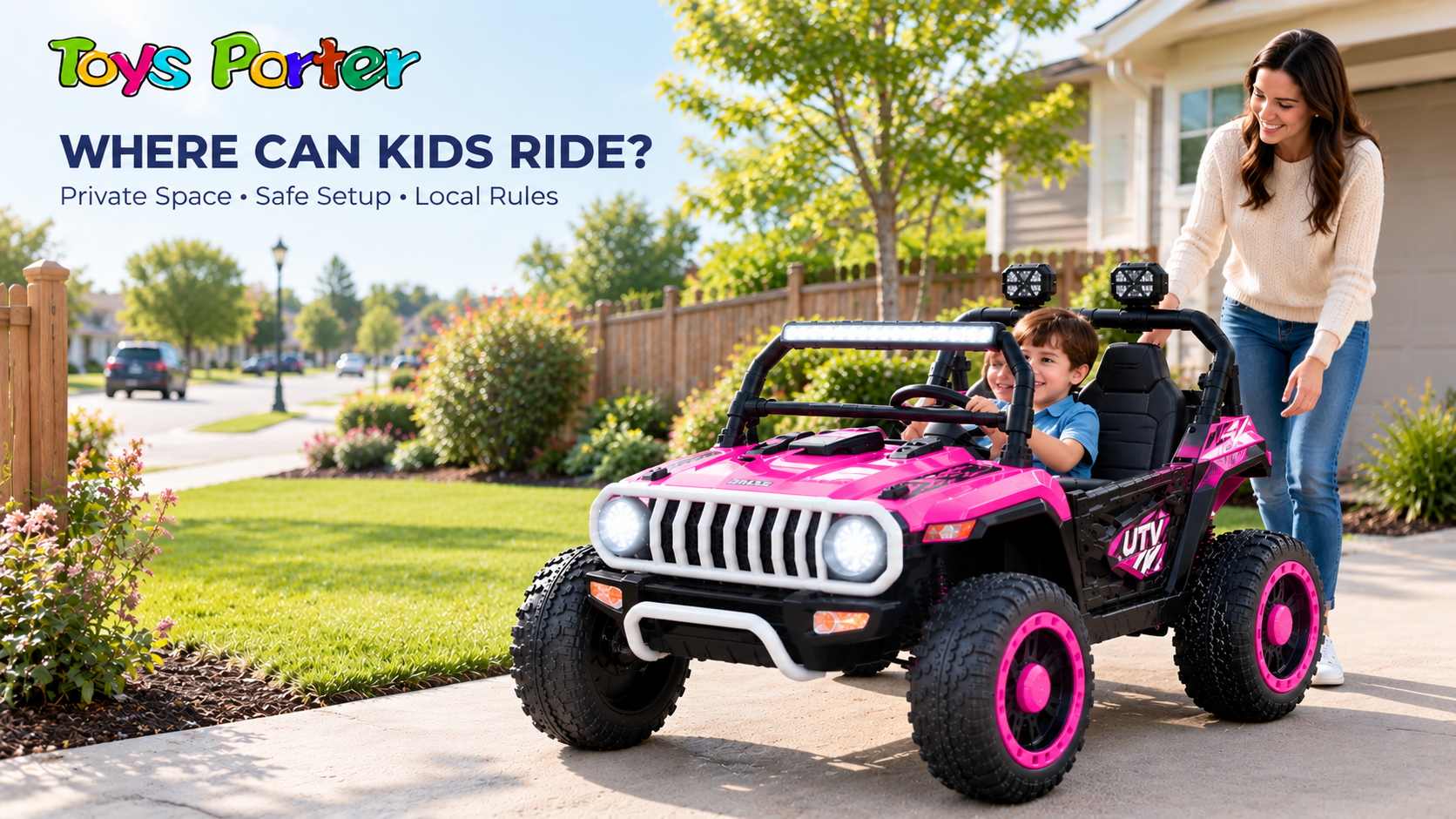
A ride-on Jeep, ATV, or motorcycle isn’t a bicycle or a scooter – it’s a battery-powered vehicle that can move at real speed, sometimes several miles an hour or more depending on the model. That distinction matters more than most parents realize, because it puts these toys in a genuinely confusing spot when it comes to homeowners and renters insurance.
Quick answer: Whether your homeowners or renters insurance covers an accident involving your child’s ride-on toy depends heavily on your specific policy. Standard homeowners policies generally exclude liability for “motor vehicles,” and insurers don’t always agree on whether a battery-powered kids’ ride-on toy counts as one. Some policies specifically carve out exceptions for low-speed recreational vehicles used on your own property; others don’t. Coverage can also change depending on where the accident happens and who’s involved. This is genuinely worth a five-minute call to your insurance agent – not something to assume either way. Nothing in this article is personalized insurance or legal advice; it’s meant to help you ask your provider the right questions.
Why This Question Even Comes Up
Most parents don’t think of a ride-on toy as a “vehicle” in the insurance sense – it’s a toy, after all. But insurers generally define “motor vehicle” by function, not by how a product is marketed. Anything battery- or gas-powered that a person rides and steers can potentially fall under a motor vehicle exclusion, regardless of whether it’s built for a driveway or a highway. Industry insurance commentary has specifically flagged battery-powered kids’ ride-on toys as a known coverage gray area for exactly this reason – not because insurers are trying to be difficult, but because these products didn’t neatly exist when a lot of standard policy language was originally written.
That gray area matters because these toys are genuinely capable of causing real injury or property damage – a collision with another child, a fall, a scraped car bumper, a toppled planter. None of that requires anything unusual happening; it’s just what can occur with any motorized vehicle in the hands of a child, however low the speed.
How Homeowners and Renters Liability Coverage Actually Works
Most homeowners and renters policies include personal liability coverage – protection if you (or a household member, including your child) are found legally responsible for injuring someone else or damaging their property. If a neighbor’s kid gets hurt on your property, or your own child accidentally damages a neighbor’s car, personal liability coverage is generally the part of your policy that would respond, assuming the situation isn’t otherwise excluded.
Separately, many policies also include a smaller medical payments coverage component. This typically pays a limited amount for minor injuries to a guest on your property, regardless of who was at fault – useful for the kind of scraped-knee-or-worse situation a ride-on toy accident might actually produce, though the payout limits tend to be modest.
The “Motor Vehicle” Exclusion Gray Area
Here’s where things get genuinely complicated. Nearly every standard homeowners policy excludes liability coverage for motor vehicles – the logic being that vehicles are supposed to be covered by auto insurance instead, not homeowners insurance. The problem is that a kids’ ride-on toy isn’t registered, licensed, or insurable the way a car is, so it doesn’t fit neatly into either category.
Some insurers address this directly, with specific language that either:
- Excludes any motorized recreational vehicle regardless of size or speed, or
- Carves out an exception for low-power recreational vehicles used on the policyholder’s own property, sometimes with conditions tied to the rider’s age or the vehicle’s top speed
Because this varies so much by insurer and even by policy edition year, there’s no single universal answer – which is exactly why this is worth confirming directly rather than assuming.
Does It Matter Where the Accident Happens?
Often, yes. Many policies that do extend some coverage to a low-speed recreational vehicle only do so while it’s on your own “insured location” – generally your home and immediate property. Once a ride-on toy leaves your yard or driveway – say, on a trip to a park, a relative’s house, or a neighborhood street – that coverage can become murkier or disappear entirely, depending on your specific policy language. This is worth factoring in any time a ride-on toy is heading somewhere other than your own property, whether that’s a family gathering, a friend’s driveway, or anywhere else it might be ridden among other kids.
What About Your Own Child Getting Hurt?
This is a common point of confusion. Personal liability coverage under your own policy generally protects you against claims from other people – it typically does not cover injuries to members of your own household, including your own children. If your child is hurt while riding their own ride-on toy, that situation is generally a health insurance matter, not a homeowners liability claim, regardless of how the accident happened.
What About a Neighbor’s Kid Riding Your Family’s Ride-On Toy?
This is the scenario most likely to actually trigger a liability question. If a visiting child is injured while riding (or playing near) your family’s ride-on toy on your property, that’s squarely the kind of situation personal liability and medical payments coverage exist for – assuming the vehicle itself isn’t excluded under your policy’s motor vehicle language. It’s a genuinely reasonable thing to ask your insurance agent about directly, especially if your child regularly has friends over to ride together.
Practical Questions to Ask Your Insurance Agent
Rather than guessing, a short conversation with your provider can clear this up quickly. Worth asking directly:
- Does my policy’s “motor vehicle” exclusion apply to battery-powered kids’ ride-on toys?
- Is there an exception for low-speed recreational vehicles used on my own property?
- Does coverage change if the vehicle is ridden somewhere other than our home?
- Would a visiting child injured while riding our ride-on toy be covered under our liability or medical payments coverage?
- Would adding an umbrella policy or a specific endorsement close any gaps my current policy has?
Getting clear, specific answers to these questions takes a few minutes and removes the guesswork entirely – far more reliable than assuming either way.
Insurance Is One Layer – Prevention Is the Other
Understanding your coverage doesn’t replace the more immediate layer of protection: reducing the chance of an accident happening in the first place. Matching a vehicle to your child’s actual age and weight, as covered in Toysporter’s guide to Power Wheels weight limits, supervising rides closely, and keeping to appropriate riding areas – all covered in Toysporter’s ride-on UTV and off-rxoad Jeep safety guide – are the practical steps that actually reduce the odds you’ll ever need to find out what your policy covers in the first place.
The Bottom Line
A kids’ ride-on toy sits in a genuinely awkward spot in the insurance world – motorized enough to raise real questions, but nothing like a car in how it’s built, used, or insured. Whether your specific policy covers an accident involving one depends on details most parents have never had a reason to check: how your insurer defines “motor vehicle,” whether an exception applies for low-speed recreational use, and where the vehicle is being ridden. None of that is something to guess at. A short call to your insurance provider before your child’s next ride is worth far more than assuming either way. For families exploring Toysporter’s electric ride-on toy collection, pairing that conversation with the right vehicle for your child’s age and weight is the most practical combination of financial and physical safety you can put in place.
FAQ
Is a kids’ battery-powered ride-on toy considered a “motor vehicle” by insurance companies?
It depends on the insurer. Some policies define “motor vehicle” broadly enough to include battery-powered recreational toys; others specifically exempt low-speed recreational vehicles used on thespolicyholder’s property. There’s no single industry-wide answer, which is why checking your specific policy matters.
Does homeowners insurance cover my own child if they’re injured on their own ride-on toy?
Generally no. Personal liability coverage typically protects you against claims from people outside your household, not injuries to your own children. A situation like that would generally fall under health insurance rather than a homeowners liability claim.
What if a neighbor’s child gets hurt riding our ride-on toy in our yard?
This is the kind of situation personal liability and medical payments coverage are generally designed for, assuming the vehicle isn’t excluded under your policy’s motor vehicle language. It’s worth confirming directly with your insurer, especially if your child often has friends over.
Does insurance coverage change if the ride-on toy is used somewhere other than home?
Often, yes. Many policies that extend some coverage to recreational vehicles limit it to the policyholder’s own property. Coverage can become less clear once a ride-on toy is taken to a park, a relative’s house, or a neighborhood street.
Should I contact my insurance agent even if nothing has happened yet?
Yes. Confirming how your policy treats ride-on toys before an incident occurs is far more useful than trying to sort it out afterward. It’s a short conversation that removes a real amount of uncertainty.
Does an umbrella insurance policy help with this kind of gap?
An umbrella policy can sometimes extend or clarify liability protection beyond a standard homeowners policy, but whether it applies to a ride-on toy scenario specifically depends on the umbrella policy’s own terms. This is worth asking your agent about directly rather than assuming.