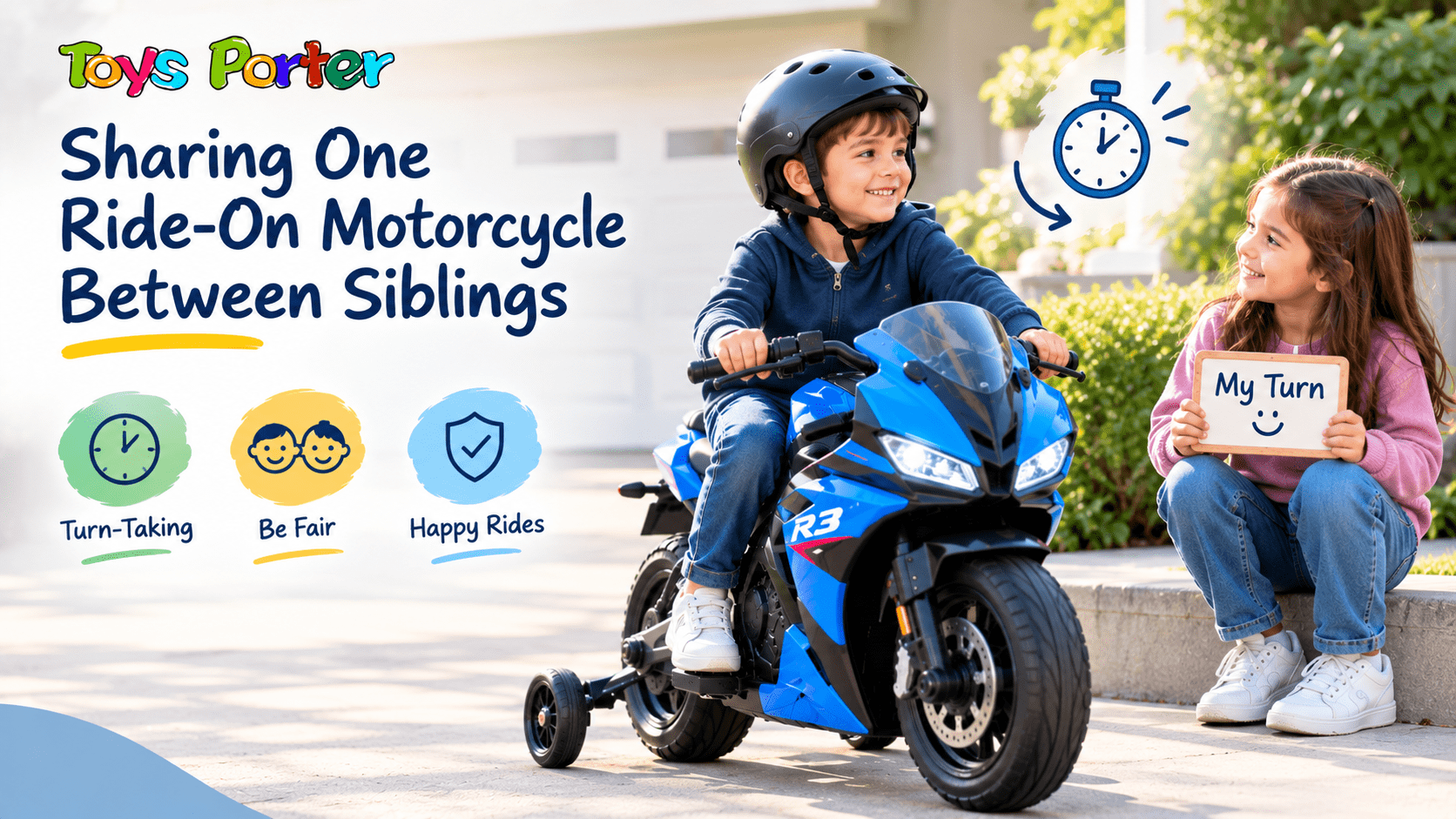
A ride-on motorcycle only fits one child at a time, and that single fact changes everything about how siblings share it compared to a 2-seater UTV or a side-by-side train. There’s no “ride together” option here – just a constant negotiation over whose turn it is, which can turn an exciting new toy into a daily source of tears within the first week.
Short answer: Because a motorcycle is a single-rider vehicle, sharing it well comes down to setting a clear, visible turn system before the fighting starts, not trying to referee it in the moment. A simple rotation, a visible timer, and a short handoff routine solve most of the conflict. The families who struggle most are usually the ones improvising turn length on the spot, which almost always feels unfair to whichever child is waiting.
Why a Motorcycle Creates a Different Sharing Problem Than a UTV or Train
Single-Seat Design Means Strict Alternating Turns
A 2-seater UTV or a side-by-side ride-on train lets two children ride at the same time, which sidesteps most sharing conflict entirely. A motorcycle doesn’t offer that option. One child rides; the other waits. That structural difference means the usual multi-seat sharing advice – assign seats, rotate who sits where – simply doesn’t apply here. The entire problem is about managing time, not seating.
The Age Gap Factor
Sibling age gaps make single-seat sharing harder in a specific way: a younger child often wants short, frequent turns, while an older child wants one long, satisfying ride. Splitting the difference evenly by the clock can leave both kids unhappy, which is worth planning around rather than discovering mid-meltdown.
Setting Up a Turn System Before Problems Start
Visible Timers Work Better Than “Just a Few More Minutes”
A phone timer, a kitchen timer, or even a simple sand timer gives both kids something concrete to watch rather than relying on a parent’s verbal countdown, which almost always sounds negotiable to a child who doesn’t want their turn to end. Setting the timer where both kids can see it removes the “but you said just one more minute” argument before it starts.
Turn Order: First Come, Oldest First, or Rotating?
There’s no universally “correct” system, but picking one in advance – and sticking with it – matters more than which one you pick. A simple rotation (child A, then child B, repeating) tends to work better long-term than “whoever asks first,” which rewards persistence and complaining rather than patience.
What to Do When the Age Gap Is Big
If one child is meaningfully younger, consider uneven but fair turns rather than identical ones: a shorter turn for a toddler who tires of sitting still, paired with a longer turn for an older child who actually wants to drive around the yard. Explaining this openly (“you get a shorter turn because you’re smaller, and that’s okay”) tends to land better than pretending the turns are secretly equal when they aren’t.
Handling the Actual Handoff
A Short Transition Routine Reduces Meltdowns
The moment a turn ends is usually where conflict actually happens, not during the ride itself. A brief, consistent routine – parking the motorcycle in the same spot, turning it off, and the next child buckling in before the previous child fully steps away – gives the handoff a predictable shape instead of an abrupt, contested stop.
What to Do With the Waiting Child
A child standing around with nothing to do while their sibling rides is a recipe for impatience. Giving the waiting child a specific small job – holding the timer, being the one who says “go” at the start of the next turn, or simply having their own separate activity nearby – keeps the wait from feeling like pure boredom.
Using the Motorcycle’s Features to Make Sharing Easier
Lower Speed Settings for the Less Experienced Rider
If your model includes multiple speed settings, using the lowest one for a younger or newer rider isn’t just a safety measure – it also tends to shorten how long that child wants to ride before getting bored, which naturally balances turn length without a parent having to enforce it directly.
Short Ride Sessions Keep Turns Moving
Rather than one long session per child per day, several shorter sessions throughout a play period often work better for sharing. More frequent, shorter turns mean less waiting time stacked up for either child, and less emotional weight riding on any single turn.
When One Motorcycle Genuinely Isn’t Enough
Sometimes, no turn system fully resolves the conflict, especially with kids close in age who both want to ride at the same time. If sharing one motorcycle continues to be a consistent source of friction, it may be worth considering a second ride-on vehicle rather than forcing a single-rider toy to serve two kids with equal enthusiasm. Toysporter’s ride-on motorcycle category can work well for a second, matching vehicle if that’s the direction you’d rather go, or browsing Toysporter’s full electric vehicle collection opens up multi-seat options like a 2-seater UTV, which sidesteps the single-rider turn problem entirely for families who’d rather avoid it going forward.
Frequently Asked Questions
How long should each child’s turn be on a shared ride-on motorcycle?
There’s no fixed ideal length, but shorter, more frequent turns (five to ten minutes) tend to reduce conflict better than one long turn per child, since less time is riding on any single handoff going smoothly.
What’s the best way to stop constant arguing over whose turn it is?
A visible timer and a consistent, pre-agreed turn order tend to resolve most of this. Most conflict comes from turns feeling unpredictable or negotiable in the moment, not from the turn length itself.
Should younger and older siblings get the same length of turn?
Not necessarily. A shorter turn for a younger child who tires quickly, paired with a longer turn for an older child, is often fairer in practice than identical turn lengths, even though it isn’t mathematically equal.
Is it worth buying a second ride-on motorcycle instead of sharing one?
It can be, particularly for siblings close in age who both want to ride at the same time rather than taking turns. If sharing remains a consistent daily conflict, a second vehicle is a reasonable option to consider.
Does using a lower speed setting help with sharing?
It can. A lower speed setting for a younger or less experienced rider is primarily a safety consideration, but it also tends to naturally shorten how long that child wants to ride, which can help balance turn-taking without extra enforcement.
Conclusion
A single-seat motorcycle makes sibling sharing a genuinely different challenge than a multi-seat vehicle, since there’s no way for both kids to ride at once. A visible, consistent turn system set up before the arguing starts, paired with a short and predictable handoff routine, resolves most of the day-to-day conflict. If sharing continues to be a sticking point despite a solid system, Toysporter’s full ride-on lineup includes multi-seat options worth considering as a second vehicle for families who’d rather sidestep the turn-taking problem altogether.