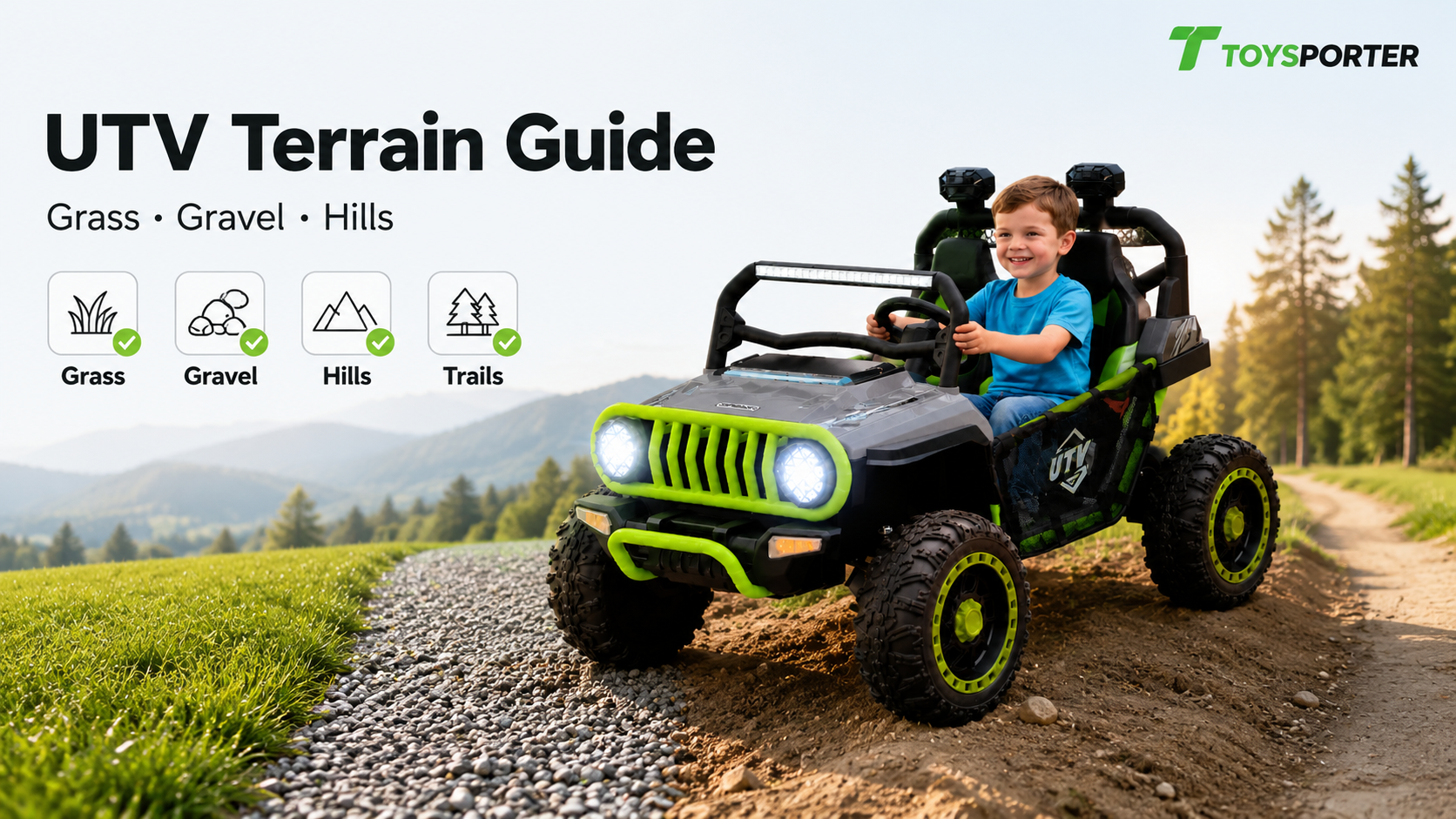
“All-terrain.” “Conquers grass, gravel, and mud.” “Built for adventure.” If you’ve shopped for a ride-on UTV or off-road Jeep-style ride-on for more than five minutes, you’ve read some version of that copy on nearly every listing. Most of it is directionally true – but “directionally true” isn’t the same as “exactly what will happen in your backyard,” and that gap is where a lot of post-purchase disappointment comes from.
This guide sets honest, specific expectations for what aRide-On UTV can actually handle, terrain type by terrain type, based on what we hear from real Toysporter families rather than marketing copy alone.
The Short Answer
A well-equipped 24V UTV with 4-wheel suspension handles short grass, packed dirt, light gravel, and mild slopes confidently. It struggles with deep mud, loose sand, tall or wet grass, and steep inclines. A 12V model or one without suspension should be treated as a pavement-and-flat-yard vehicle, regardless of what the box art suggests.
Terrain-by-Terrain Breakdown
Pavement, Driveways, and Patios
Every UTV in this category handles smooth, hard surfaces well, regardless of voltage or suspension. If this is most of your riding area, almost any model in the category will perform close to its marketing description.
Short, Dry Grass
Manageable for most 24V models, especially with 4-wheel suspension and wider tires. Expect a slightly bumpier ride and modestly reduced range compared to pavement, since grass adds rolling resistance.
Tall or Wet Grass
This is where expectations and reality diverge most. Tall grass can catch on the undercarriage and reduce traction significantly; wet grass reduces tire grip and can affect braking distance. Short, regular sessions on recently mowed, dry grass hold up far better than “anytime, any grass” use.
Packed Dirt and Light Gravel
24V models with good ground clearance generally do fine here. Loose, deep gravel is more challenging – tires can dig in rather than roll over it, and steering becomes noticeably harder to predict.
Mud
Short, occasional mud crossings are usually fine. Sustained mud play is not something most ride-on UTVs are built for – it affects traction, can work into wheel wells and electrical connections, and significantly increases post-ride cleaning and maintenance needs.
Sand
Loose sand is one of the toughest surfaces for this category. Without genuinely oversized, low-pressure tires (rare in the kids’ ride-on segment), most UTVs will spin their wheels rather than move through it.
Hills and Slopes
Mild grades – the kind found in most suburban yards – are fine for 24V models. Steeper slopes affect both climbing power and, more importantly, controlled stopping on the way back down. Start any new slope at the lowest speed setting.
Quick-Reference Terrain Table
Terrain
12V Model
24V Model (No Suspension)
24V Model (4-Wheel Suspension)
Pavement/driveway
Excellent
Excellent
Excellent
Short, dry grass
Limited
Good
Excellent
Tall or wet grass
Poor
Limited
Fair
Packed dirt
Limited
Good
Excellent
Light gravel
Poor
Fair
Good
Mud (occasional)
Poor
Fair
Fair
Sand
Poor
Poor
Poor
Mild slopes
Limited
Good
Good
How Terrain Affects Battery Range
Rougher terrain draws more power than flat pavement, sometimes significantly. A ride that lasts close to the advertised runtime on a driveway may run noticeably shorter on grass or dirt, simply because the motor works harder to maintain speed. This is normal and not a sign of a defective battery – it’s worth setting that expectation before the first grass ride rather than after.
Seasonal Terrain Notes for U.S. Families
Spring: thawing ground can mean unexpectedly soft or muddy patches even in yards that are normally firm – worth a quick visual check before a full-speed ride.
Summer: dry, hard-packed dirt and short grass are usually at their most rideable this time of year.
Fall: wet fallen leaves can be as slippery as wet grass and easily hide holes or roots underneath.
Winter: cold temperatures reduce battery performance and range regardless of terrain, and frozen or snow-covered ground isn’t recommended for this category at all.
Tires: The Detail That Matters More Than Most Parents Expect
Two UTVs with identical voltage and suspension can perform noticeably differently based on tire design alone. Wider, deeper-tread tires meaningfully outperform narrow, smooth ones on anything other than pavement. If your riding area includes grass or dirt regularly, tire design is worth checking as closely as voltage.
A Real-World Scenario: Matching Expectations to Terrain
A family in Colorado with a mostly dirt-and-gravel side yard nearly returned their first UTV, assuming it was defective because it struggled on loose gravel sections. After switching to a 24V model with wider, deeper-tread tires and sticking to the packed sections of their yard, the same “defective” complaint became their favorite feature – a reminder that terrain mismatch, not a faulty vehicle, is behind a lot of early disappointment in this category.
Pre-Purchase Terrain Checklist
Walk your intended riding area and note where it’s genuinely flat, packed dirt versus loose gravel, sand, or consistently wet.
If grass is involved, plan on short, dry-grass sessions rather than all-weather, all-height use.
Prioritize 4-wheel suspension and wider tires if anything beyond pavement is part of your regular riding plan.
Set battery-range expectations lower for rough terrain than the advertised flat-ground runtime.
Avoid sand and deep mud entirely unless you’re prepared for extra cleaning and maintenance.
Where to Go From Here
If your terrain leans toward tighter, faster solo play rather than shared side-by-side riding, ourRide-On ATV collection may be a better terrain match. For the voltage decision that underlies most of this terrain performance, our24V vs. 12V voltage guide goes deeper, and ourBest Sellers collection highlights the models best equipped for varied terrain.
FAQ Section
Can a ride-on UTV handle grass?
Yes, short and dry grass is manageable for most 24V models with 4-wheel suspension. Tall or wet grass is more difficult and can reduce both traction and battery range.
Are ride-on UTVs good on gravel?
Light, packed gravel is generally fine for 24V models with good tires. Loose, deep gravel is more challenging and can cause the wheels to dig in rather than roll over it.
Can a kids’ UTV go through mud?
Occasional, short mud crossings are usually fine. Sustained mud play isn’t recommended – it affects traction and can work into electrical components, increasing maintenance needs.
Do ride-on UTVs work on sand?
Not well. Loose sand is one of the most difficult surfaces for this category, since most kids’ ride-on tires aren’t designed for it.
How much does terrain affect battery life?
Meaningfully. Rougher terrain draws more power than pavement, so expect shorter run times on grass or dirt than the advertised flat-ground battery life.
Is 4-wheel suspension worth it for off-road use?
Yes, if your riding area includes anything beyond a smooth driveway. It noticeably improves handling on grass, dirt, and mild bumps compared to models without it.