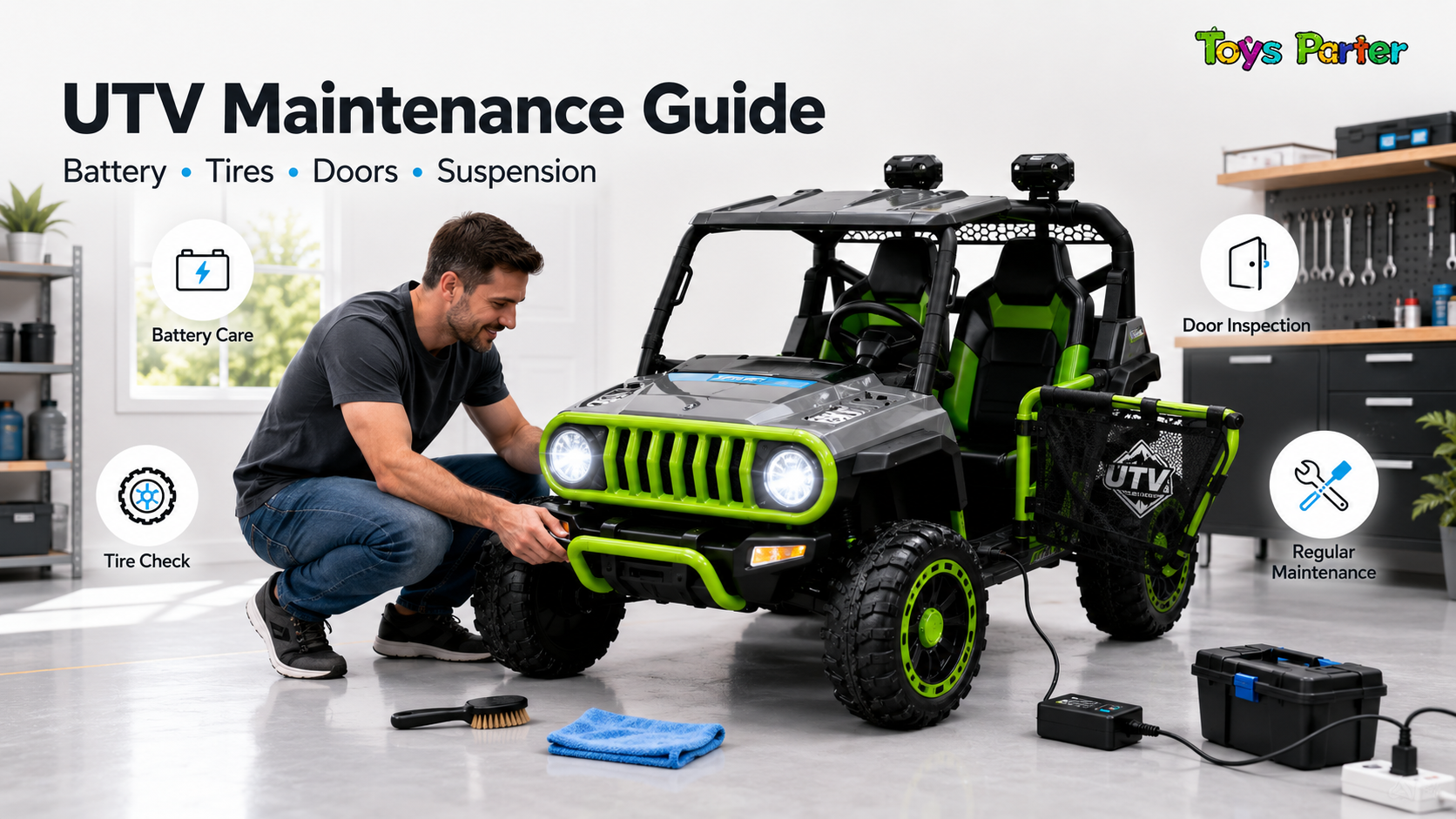
The families who get three or four riding seasons out of a ride-on UTV, and the ones who are shopping for a replacement after one summer, usually aren’t separated by luck or a better-built machine. They’re separated by a handful of small maintenance habits that take a few minutes a month and are almost never mentioned in the product box.
This guide covers exactly how to keep aRide-On UTV or off-road Jeep-style ride-on running well, season after season.
A Simple Monthly Maintenance Routine
Wipe down the body and cab, especially after grass, dirt, or mud sessions – built-up debris around wheel wells and door hinges causes more long-term wear than most parents expect.
Check tire tread and pressure (for air-filled tires) or general condition (for solid tires) for uneven wear that might signal an alignment or suspension issue.
• Test both doors, making sure latches catch fully and hinges aren’t loosening.
Inspect the seatbelt webbing and buckles for fraying or stiffness.
Give the battery a full charge even during weeks it wasn’t used much, rather than letting it sit partially drained.
Tire Care
Tires take the most cumulative wear of any component, especially with regular off-road use. Rotate front-to-back periodically if the model allows it, since front tires on most UTVs wear faster from steering stress. Clean embedded debris out of tread grooves after muddy or gravel-heavy sessions – packed debris reduces traction on the next ride and accelerates wear.
Suspension Checks
4-wheel suspension systems handle a lot of repeated stress on uneven terrain. Periodically check that all four corners compress and rebound evenly when you press down on each side – a corner that feels noticeably stiffer or looser than the others is worth a closer look before it becomes a bigger issue.
Doors, Hinges, and Latches
Doors are one of the more failure-prone components specifically because they’re used constantly and see repeated stress at the hinge and latch points. A drop of household lubricant on hinges every few months, and prompt attention to a latch that’s starting to feel loose, prevents most of the door problems we hear about from long-term owners.
Battery Care Basics
Habit
Why It Matters
Charge after every ride, not just when low
Partial-charge cycles are gentler on the battery than deep discharges
Use only the charger that came with the vehicle
Mismatched chargers are a common cause of premature battery failure
Charge on a hard, ventilated surface
Reduces fire risk and keeps the charging area safe for supervision
Avoid letting the battery sit fully drained for weeks
Deep discharge shortens both lead-acid and lithium battery lifespan
Store fully charged over winter, with a top-off every 6-8 weeks
Prevents the battery from degrading during long off-season storage
End-of-Season Storage
Clean the body, tires, and undercarriage thoroughly before storing – dirt and moisture left in place over winter accelerate wear.
Store indoors if possible – a garage or shed protects the body and electronics far better than leaving it outside under a cover.
Disconnect and bring the battery indoors if the storage space isn’t temperature-controlled, since freezing temperatures are especially hard on battery lifespan.
Check tire pressure (if air-filled) before the first ride of the new season, since tires can lose pressure gradually even in storage.
Common Issues and Realistic Fixes
“It Won’t Move, But Lights and Sound Still Work”
This is often a loose battery connector or a partially discharged battery rather than a serious fault. Check that the connector is fully seated and give the battery a full charge before assuming a bigger problem.
“One Side Feels Weaker Than the Other”
On dual-motor models, this can indicate a connection issue on one side rather than a failed motor. Worth checking wiring connections before assuming a motor replacement is needed.
“The Door Won’t Latch Properly Anymore”
Usually a sign the hinge has loosened slightly from repeated use – tightening the hinge hardware resolves this in most cases without needing a replacement part.
When to Contact Support Instead of DIY-Fixing
Battery replacement, motor issues that persist after checking connections, and any structural cracks in the frame are worth contacting Toysporter’s customer support about rather than attempting a full repair – many issues are covered under warranty within the return window, and support can often diagnose a problem faster than trial and error at home. OurFAQs page covers warranty and return timelines if you’re not sure whether an issue qualifies.
A Real-World Example: Three Seasons and Counting
A family in Pennsylvania has kept their 24V UTV running for three riding seasons using nothing more than a monthly wipe-down, a full charge after every ride, and winter storage in their garage with the battery brought inside. Their only replacement part in three years was a set of tires – a stretch of ownership well beyond what they expected from a kids’ ride-on toy.
Maintenance Checklist
Wipe down body and check tires monthly.
Test doors and latches regularly, especially after heavy use.
Charge fully after every ride; never store the battery fully drained.
Clean debris from tire tread after off-road sessions.
Store indoors over winter with the battery brought in if unheated.
Contact support for battery, motor, or frame issues rather than attempting major DIY repairs.
Where to Go From Here
Weight capacity plays a bigger role in long-term wear than most parents expect – ourweight limits and long-term performance guide covers that in more detail. Jeep-styleRide-On Truck owners will find most of this advice applies equally, and ourBest Sellers collection is a good place to start if a well-loved UTV is finally ready for a successor.
FAQ Section
How long should a ride-on UTV last with good care?
Many families get 2 to 4 riding seasons or more with regular maintenance – monthly cleaning, proper charging habits, and appropriate winter storage. Neglecting these can shorten that considerably.
How often should I charge my kids’ ride-on UTV battery?
After every ride, rather than waiting until it’s low. Partial-charge cycles are gentler on the battery than letting it fully drain before recharging.
Why won’t my ride-on UTV move even though the lights work?
This is often a loose battery connector or a partially discharged battery rather than a serious defect. Check the connector and give it a full charge before assuming a bigger issue.
Should I store my ride-on UTV outside over winter?
Indoor storage is strongly preferred. If it must stay outside, disconnect and bring the battery indoors, since freezing temperatures significantly shorten battery lifespan.
What maintenance does a ride-on UTV actually need?
A monthly wipe-down, tire and door checks, proper charging habits, and seasonal storage care. It’s a modest routine, but a consistent one that meaningfully extends the vehicle’s lifespan.
When should I contact customer support instead of fixing an issue myself?
For battery replacement, persistent motor issues after checking connections, or any structural frame damage. These are often covered under warranty and are best diagnosed by support rather than DIY repair.